The EV Charging Bottleneck Is No Longer Vehicle Supply — It’s Power Infrastructure

Global EV adoption is accelerating at a pace that traditional utility infrastructure was never designed to support. According to the International Energy Agency, worldwide electric vehicle sales exceeded 17 million units in 2024, while commercial fleet electrification continues to expand across logistics, construction, mining, ports, and industrial transportation sectors.

However, one critical issue is slowing deployment:

High-power EV charging infrastructure is not keeping up with energy demand.

In many operational environments — including remote construction projects, temporary industrial sites, logistics depots, mining operations, ports, and disaster-response zones — utility grids often cannot provide sufficient power capacity for DC fast charging.

Today’s infrastructure gap is primarily driven by three factors:

  • Limited transformer and utility capacity, often requiring costly grid upgrades with lead times ranging from 12 to 36 months
  • Lack of reliable grid access in off-grid or temporary operating environments
  • High peak-demand electricity charges that significantly increase charging operating costs for fleet operators

As a result, more companies are turning toward mobile photovoltaic energy storage charging systems as a faster and more flexible alternative to conventional charging infrastructure.


What Is a Mobile Photovoltaic Energy Storage Charging System?

A mobile photovoltaic energy storage charging system — also referred to as a mobile BESS (Battery Energy Storage System) or mobile microgrid EV charger — is an integrated clean-energy platform designed to deliver high-power EV charging without relying entirely on the utility grid.

These systems typically combine:

  • High-capacity LiFePO4 battery storage
  • Solar photovoltaic (PV) integration
  • DC fast-charging capability
  • Intelligent energy management software
  • Integrated thermal control systems for cooling and heating
  • Peak shaving and microgrid support functions

Unlike traditional fixed charging stations, mobile charging platforms can be transported directly to the point of demand and deployed rapidly. They function simultaneously as:

  • EV charging infrastructure
  • Distributed energy resources (DERs)
  • Temporary microgrids
  • Emergency backup power systems

This flexibility makes them especially valuable in industries where operations move faster than grid expansion timelines.


Key Advantages of Mobile Solar Energy Storage EV Charging

1. Rapid Deployment

Traditional grid-connected DC charging stations often require permitting, utility coordination, transformer upgrades, and civil construction that can take years.

By comparison, containerized mobile charging systems can typically be operational within hours after arriving onsite.

2. Grid-Independent Charging

Mobile photovoltaic charging systems can operate in locations with:

  • Weak grid connections
  • No utility access
  • Temporary infrastructure
  • Disaster-related outages

This enables electrification projects to move forward immediately instead of waiting for permanent utility expansion.

3. Peak Demand Reduction

Battery storage systems can charge during off-peak periods or through solar generation, then discharge energy during charging sessions.

This reduces expensive utility demand charges and improves energy cost efficiency for fleet operators.

4. Renewable Energy Integration

By integrating solar PV with battery storage, operators can reduce carbon emissions while improving energy resilience and sustainability performance.


Sunming Power’s Featured Solutions

208kWh / 180kW Fixed Solar Energy Storage Charging System

This semi-permanent charging solution is designed for locations where long-term charging demand exists but utility upgrades are impractical or delayed.

Typical applications include:

  • Construction equipment charging
  • Agricultural operations
  • Rural fleet depots
  • Industrial equipment yards
  • Remote service facilities

Core specifications include:

  • 208 kWh LiFePO4 battery storage
  • 180 kW DC fast charging
  • Integrated liquid-cooling thermal management
  • Cold-weather heating capability
  • Solar PV compatibility

The system supports charging for commercial EVs, electric construction machinery, and heavy-duty industrial vehicles.


1.2MWh / 2MWh Mobile Fast Charging Platform

This is Sunming Power’s flagship mobile solution — a fully containerized, transportable charging platform capable of serving multiple EVs simultaneously.

These containerized systems are engineered for:

  • Logistics fleet electrification
  • Mining operations
  • Port terminals
  • Temporary public charging deployment
  • Emergency power response
  • Industrial microgrids

Key capabilities include:

  • Up to 2MWh battery capacity
  • Up to 650kW ultra-fast DC charging
  • Simultaneous multi-vehicle charging
  • Peak shaving and demand-response functionality
  • Microgrid islanding support
  • Transportable modular deployment

This architecture enables megawatt-class charging even in locations with minimal or nonexistent utility infrastructure.


How Mobile Battery Energy Storage EV Charging Works

The operating model is straightforward but highly effective.

Step 1: Energy Collection

Energy is collected either from:

  • Solar photovoltaic arrays
  • Off-peak utility charging
  • Hybrid renewable energy sources

Step 2: Battery Energy Storage

The onboard LiFePO4 battery system stores energy until charging demand occurs.

Step 3: High-Power EV Charging

When EVs connect, stored energy is discharged at high-speed DC charging rates independent of immediate grid availability.

Step 4: Grid Optimization

When connected to utility infrastructure, the system can stabilize local power demand through:

  • Peak shaving
  • Load balancing
  • Demand-response participation
  • Backup power support

This hybrid approach dramatically reduces infrastructure constraints for commercial EV deployment.


Where Mobile EV Charging Systems Deliver the Highest ROI

Construction & Infrastructure Projects

Electric excavators, loaders, dump trucks, and site vehicles require high daily energy throughput in locations where grid access is often unavailable.

Mobile charging systems eliminate dependence on diesel fuel logistics while enabling low-emission jobsite operations.

Fleet Electrification

Fleet operators frequently face long delays waiting for transformer upgrades and utility approvals.

Mobile BESS charging systems allow fleets to begin operating immediately while permanent charging infrastructure is developed.

Mining & Remote Industrial Sites

Mining projects, energy infrastructure projects, and remote industrial facilities benefit from clean, transportable power systems that avoid costly permanent grid expansion.

Emergency Response & Disaster Recovery

During grid failures or natural disasters, mobile energy storage systems can rapidly supply power for:

  • Emergency EV charging
  • Critical infrastructure
  • First responder fleets
  • Temporary microgrids

Temporary Events & Pop-Up Charging

Festivals, motorsports, expos, and temporary transportation hubs often require large amounts of short-term charging capacity without permanent infrastructure investment.


Why LiFePO4 Batteries Are Preferred for Commercial Energy Storage

Most commercial mobile charging platforms now rely on lithium iron phosphate (LiFePO4) chemistry rather than nickel-based alternatives.

The advantages are significant:

  • Higher thermal stability and improved safety
  • Lower risk of thermal runaway
  • Longer operational lifespan
  • Typically 6,000+ charge cycles
  • Lower total cost of ownership
  • Cobalt-free battery chemistry
  • Strong performance under frequent daily cycling

For demanding commercial charging applications, LiFePO4 has become the preferred battery technology standard.


Mobile BESS Systems Are Becoming Critical Distributed Energy Resources

Modern mobile energy storage charging platforms do far more than charge EVs.

They also function as distributed energy resources capable of improving overall energy resilience.

Operators can use these systems to:

  • Reduce peak electricity demand charges
  • Support renewable energy integration
  • Participate in utility demand-response programs
  • Provide backup power during outages
  • Improve ESG and Scope 2 emissions performance
  • Stabilize weak local grids

This transforms EV charging infrastructure from a pure operational expense into a strategic energy asset.


Frequently Asked Questions

Can a mobile battery storage system charge heavy-duty electric trucks?

Yes. High-capacity mobile charging platforms can support Class 8 electric trucks and other heavy-duty commercial vehicles, depending on battery size, duty cycles, and deployment strategy.

How are mobile EV charging systems recharged?

Systems can recharge through:

  • Solar PV generation
  • Utility grid charging during off-peak hours
  • Hybrid renewable energy systems
  • Centralized charging hubs

How quickly can deployment occur?

Most containerized systems can be deployed and operational within several hours, compared to months or years for traditional fixed infrastructure projects.

Is mobile charging more expensive than grid-connected charging?

Per-kWh charging costs may be slightly higher in some scenarios. However, avoided utility upgrades, reduced demand charges, faster deployment timelines, and improved operational flexibility often lower total ownership costs.

What is the expected service life?

With proper thermal management and LiFePO4 battery chemistry, commercial systems are commonly designed for 10–15 years of operational service.


The Future of EV Infrastructure Is Flexible, Mobile, and Distributed

Permanent charging infrastructure will remain important, but utility expansion alone cannot support the speed of global fleet electrification.

The next phase of EV charging growth will increasingly depend on:

  • Mobile energy storage systems
  • Distributed charging infrastructure
  • Solar-integrated microgrids
  • Modular off-grid charging solutions

For industries operating in remote, temporary, or power-constrained environments, mobile photovoltaic energy storage charging systems provide a practical path toward scalable electrification without waiting years for grid upgrades.

As EV adoption continues to accelerate worldwide, flexible energy infrastructure will become just as important as the vehicles themselves.

Sunming Power’s mobile and fixed photovoltaic energy storage charging systems are built for that future: zero-emission, grid-independent, and ready to power the electrification revolution anywhere on the map.

About Sunming Power

Sunming Power designs and manufactures mobile and fixed photovoltaic energy storage and EV charging systems for fleet operators, construction firms, industrial sites, and emergency response applications worldwide. Our solutions combine LiFePO4 battery technology, integrated thermal management, and intelligent energy management software to deliver clean, reliable, ultra-fast charging — with or without grid access.

📩 Contact us to discuss your off-grid charging, fleet electrification, or mobile microgrid project.

Mobile DC Fast Charging Explained: How Portable 400–500kW Stations Are Reshaping EV Infrastructure in 2026

Published by SunmingPower | EV Charging Infrastructure Insights

Quick Answer (TL;DR)

Mobile DC fast charging is a portable Level 3 EV charging solution that delivers 400–500 kW of power from a self-contained battery system (typically 400–1,000 kWh capacity), without requiring grid connection, construction permits, or fixed infrastructure. SunmingPower’s mobile charging stations enable businesses to deploy commercial-grade EV fast charging in hours instead of the 12–18 months required for permanent installations.


What Is Mobile Level 3 DC Fast Charging?

Mobile Level 3 DC fast charging refers to a transportable, battery-integrated charging system capable of delivering high-voltage direct current (DC) directly to an electric vehicle at speeds of 400 kW or higher. Unlike Level 1 (AC, ~1.4 kW) and Level 2 (AC, 7–22 kW) chargers, Level 3 systems bypass a vehicle’s onboard converter and feed DC straight into the battery, enabling charging speeds that add roughly 250–400 km of range in 15 minutes.

A mobile Level 3 unit differs from traditional fixed chargers in three core ways:

  1. It carries its own energy storage (a large lithium-ion battery pack between 400 and 1,000 kWh).
  2. It does not require permanent grid connection at the deployment site.
  3. It can be relocated based on demand patterns, events, or seasonal traffic.

Why Mobile Fast Charging Matters Right Now

The global EV market crossed 17 million annual unit sales in 2024, yet public charging infrastructure continues to lag behind vehicle adoption in nearly every major market. The International Energy Agency has repeatedly flagged this gap as the single largest barrier to EV adoption outside of vehicle price.

Three structural problems make fixed infrastructure insufficient on its own:

  • Permitting and construction timelines for permanent DC fast chargers typically run 12–18 months, sometimes longer in dense urban zones.
  • Grid capacity constraints mean many ideal locations (highway exits, event venues, rural corridors) cannot physically support a 400 kW connection without expensive transformer upgrades.
  • Demand is uneven: traffic spikes during holidays, festivals, sporting events, and tourist seasons rarely justify a permanent installation, yet they represent significant lost revenue.

Mobile fast charging solves all three problems simultaneously.

How SunmingPower’s Mobile Charging Stations Work

SunmingPower mobile DC fast chargers integrate a high-capacity battery system, power conversion electronics, and CCS/CHAdeMO/GB-T charging connectors into a single transportable unit. The system operates in two stages:

Stage 1 — Recharging the unit. The internal battery (400–1,000 kWh, depending on configuration) is charged from any available AC source during off-peak hours, or from renewable energy such as on-site solar.

Stage 2 — Dispatching power to EVs. When deployed, the unit delivers 400–500 kW of DC fast charging directly to vehicles on demand, independent of the local grid at that moment.

This architecture means a SunmingPower station can be dropped into a parking lot, festival ground, construction site, or highway rest stop and begin generating charging revenue the same day.

Who Benefits Most From Mobile DC Fast Charging?

Based on current deployment patterns across the industry, the highest-ROI use cases are:

  • Event organizers — music festivals, sporting events, trade shows, and conferences where thousands of EVs arrive in a single weekend.
  • Hospitality and tourism operators — hotels, resorts, and national-park-adjacent businesses with strong seasonal peaks.
  • Shopping centers and retail destinations during holiday shopping seasons.
  • Highway service operators managing congestion during long-weekend travel surges.
  • Fleet operators needing temporary depot charging during facility upgrades.
  • Municipalities piloting EV infrastructure before committing to permanent build-outs.
  • Disaster response and emergency services requiring resilient, off-grid power.

Mobile vs. Fixed DC Fast Charging: Direct Comparison

FactorFixed DC Fast ChargerSUNMINGPOWER Mobile Station
Deployment time12–18 monthsHours to days
Capital expenditure$150,000–$500,000+ per siteNo site infrastructure cost
PermittingExtensive (utility, zoning, construction)Minimal to none
Grid upgrade requiredOften yesNo
RelocatableNoYes
Power output50–350 kW typical400–500 kW
Energy capacityUnlimited (grid-tied)400–1,000 kWh per charge cycle
Revenue flexibilityFixed location onlyFollows demand

What Capacity and Power Output Should a Business Choose?

The right configuration depends on expected vehicle throughput:

400 kWh unit at 400 kW can serve approximately 8–10 full charging sessions per cycle and is well suited to small venues, hotels, and low-volume locations.

600–800 kWh unit at 480 kW balances flexibility and throughput, supporting roughly 12–18 sessions per cycle. This is the sweet spot for most commercial deployments.

1,000 kWh unit at 500 kW can support 20+ sessions per cycle and is ideal for high-traffic events, highway corridors, or fleet operations.

Frequently Asked Questions

Is mobile DC fast charging safe? Yes. SunmingPower mobile stations include multi-layer battery management systems (BMS), thermal monitoring, fire suppression, and certified DC fast charging connectors compliant with international safety standards.

Do I need special permits to operate a mobile charging station? Requirements vary by jurisdiction, but mobile stations generally avoid the construction, zoning, and utility-interconnection permits required for fixed chargers, because no permanent infrastructure is built.

How long does it take to recharge the mobile unit itself? Recharge time depends on the AC input available, typically 6–10 hours on standard three-phase commercial power. Units can also be swapped to maintain continuous service.

Can mobile fast chargers be powered by solar or renewables? Yes. The battery can be charged from any compliant AC source, including on-site solar arrays, making mobile stations a strong fit for sustainability-driven operators.

What is the typical ROI for a business deploying mobile fast charging? ROI varies by location and utilization, but because there is no site construction cost and the asset can be redeployed to follow demand, payback periods are generally significantly shorter than fixed installations.

Which connectors are supported? SunmingPPower units support the major global DC standards including CCS1, CCS2, CHAdeMO, and GB/T, configurable by region.

Key Takeaways

Mobile DC fast charging is no longer a niche workaround — it is a strategic infrastructure category in its own right. For businesses that want to capture EV charging revenue without locking themselves into permanent infrastructure, the value proposition is straightforward: deploy faster, deploy where demand actually is, and adapt as the market evolves.

SunmingPower mobile charging stations provide 400–1,000 kWh of energy capacity and 400–500 kW of charging power in a fully self-contained, redeployable unit — making commercial-grade Level 3 fast charging accessible to operators who could never justify the cost or timeline of a permanent build.


About SunmingPower: SunmingPower designs and manufactures mobile DC fast charging solutions for commercial, event, fleet, and municipal applications worldwide.

Learn more: [Contact SunmingPower] | [Request a deployment quote] | [Download technical specifications]

Mobile EV Charging for Fleets: Solving the EV Infrastructure Gap in 18–24 Months

What Is Mobile EV Charging and Why It Matters


Mobile EV charging refers to deployable, off-grid EV charging systems that can be installed and activated within days—without waiting for utility upgrades or permanent infrastructure.


Solutions like SunmingPower use renewable propane-powered generators to deliver reliable, high-capacity EV charging for:

Commercial fleets

Logistics and last-mile delivery

Ride-share drivers

Electric bus and transit systems

Emergency and disaster-response operations


Why this matters:

Traditional EV charging infrastructure takes 18–24 months (or longer) to build.

Mobile EV charging reduces this to days, enabling immediate fleet deployment.


The EV Infrastructure Gap: A Critical Bottleneck

Fleet electrification is accelerating, but infrastructure is not keeping pace.


Across the U.S., fleets are adopting:


Electric delivery vans


Class 8 electric trucks


Electric school and transit buses


At the same time, companies are targeting:


30–50% electrification by 2030


Net-zero and ESG commitments


The problem:


EVs are being deployed faster than charging infrastructure can be built.


Permanent EV charging requires:


Utility interconnection


Transformer upgrades


Permitting and zoning


Civil construction


Typical timeline:


18–24 months (standard markets)


24–48+ months (grid-constrained regions)


Result:


A growing EV infrastructure gap that limits:


Fleet utilization


Operational efficiency


ROI on EV investments


How Off-Grid EV Charging Works


Off-grid EV chargers like SunmingPower operate independently from the utility grid.


They generate electricity on-site using renewable (green) propane, enabling continuous EV charging anywhere.


Key Features of Mobile EV Charging Systems


Rapid deployment: Operational in days


No grid dependency: Works in remote or constrained locations


Scalable charging output: Supports vans, trucks, and buses


Lower emissions than diesel generators


Dual-use capability: EV charging + backup power


This makes mobile charging ideal for temporary, transitional, and high-demand scenarios.


Top Use Cases for Fleet EV Charging Solutions


  1. Fleet Depots & Logistics Hubs


Deploy portable EV charging stations while permanent infrastructure is under construction.


  1. Last-Mile Delivery Fleets


Support overnight charging at urban micro-depots without grid upgrades.


  1. Ride-Share Charging Hubs


Install mobile EV chargers in high-demand zones to reduce driver wait times.


  1. Electric Truck & Bus Fleets


Enable immediate charging for:


Class 8 trucks


Transit buses


School buses


  1. Construction & Temporary Sites


Provide off-grid EV power where infrastructure does not yet exist.


Mobile EV Charging for Emergency Power and Disaster Response


One of the most strategic advantages of mobile EV charging is energy resilience.


During grid outages caused by:


Hurricanes


Wildfires


Heatwaves


Winter storms


Off-grid EV charging systems continue operating.


Emergency Applications:


Charging electric emergency vehicles


Powering disaster-response operations


Supporting communication infrastructure


Maintaining medical cold-chain logistics


Key Users:


Government agencies


Disaster-response contractors


NGOs and humanitarian organizations


Mobile EV charging becomes a critical infrastructure asset during crises.


Why Renewable Propane for EV Charging?


Renewable propane (green propane) is a low-carbon fuel derived from biological and waste-based feedstocks.


Advantages over diesel generators:


Lower lifecycle greenhouse gas emissions


Near-zero particulate emissions


Quiet operation (urban-friendly)


Reliable fuel supply across North America


For fleet operators, it serves as a practical bridge solution for decarbonization.


Mobile EV Charging vs Traditional EV Infrastructure


Factor Mobile EV Charging Permanent EV Charging


Deployment Time Days 18–24+ months

Grid Dependency None Required

Flexibility High (relocatable) Fixed

CapEx Risk Lower Higher upfront

Disaster Readiness Built-in Limited


Frequently Asked Questions (SEO Optimized)


What is a mobile EV charger?

A mobile EV charger is a portable, off-grid system that delivers electric vehicle charging without requiring permanent infrastructure.


How fast can mobile EV charging be deployed?

Most systems can be deployed within days.


Can mobile EV chargers support heavy-duty fleets?

Yes, they can charge delivery vans, electric trucks, and buses.


Is mobile EV charging a long-term solution?

It can be used as both a permanent solution or a temporary bridge.


What is the best alternative to diesel generators for EV charging?

Renewable propane-powered systems provide cleaner, quieter, and more efficient charging.


The Future of Fleet Electrification


The transition to electric fleets is no longer constrained by vehicle supply—it is constrained by infrastructure speed.


Mobile EV charging solutions solve this problem by delivering:


Immediate deployment


Grid independence


Operational flexibility


Built-in resilience


For fleet operators, municipalities, and emergency responders, this is not just a convenience—it is a strategic necessity.


Deploy Mobile EV Charging in Days, Not Years

Get in touch to design a scalable, off-grid EV charging solution for your fleet.

As global demand for clean energy continues to grow, the need for reliable and scalable energy storage systems has never been greater. Behind every high-performance battery system lies a sophisticated manufacturing process designed to ensure quality, safety, and long-term reliability.

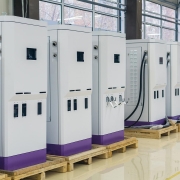
The image above highlights a production line of energy storage units in a modern manufacturing facility. Each system is carefully assembled, inspected, and tested to meet the rigorous standards required for renewable energy applications, industrial power management, and electric vehicle infrastructure.

Precision Engineering in Every System

Energy storage systems require a high level of engineering precision. From battery management systems to thermal protection and power control components, every part must operate seamlessly within a complex electrical architecture.

Modern manufacturing facilities integrate automated assembly processes with strict quality control procedures. This combination ensures that each energy storage unit delivers consistent performance and reliability across a wide range of operating environments.

Ensuring Safety and Performance

Battery storage technology must meet strict safety standards to operate effectively in residential, commercial, and industrial applications. Manufacturing facilities implement multiple testing stages to verify electrical performance, thermal stability, and system durability.

These tests help ensure that every system can safely store and deliver energy under demanding conditions, whether supporting renewable energy grids, backup power solutions, or EV charging infrastructure.

Supporting the Expansion of Renewable Energy

Energy storage manufacturing plays a key role in accelerating the global transition toward sustainable power systems. As solar and wind energy installations expand worldwide, battery systems provide the stability needed to manage fluctuations in renewable generation.

Large-scale manufacturing capabilities allow energy companies to deliver storage solutions that support:

  • Renewable energy integration
  • Grid stabilization and peak load management
  • Industrial energy optimization
  • EV charging infrastructure
  • Backup power and microgrid systems

Driving Innovation in Energy Technology

Manufacturers continue to invest in research, automation, and advanced materials to improve battery efficiency and system performance. Innovations in battery management software, thermal design, and modular architecture are helping create smarter and more adaptable energy storage solutions.

Through continuous innovation and strict manufacturing standards, energy storage providers are helping build a more reliable and sustainable energy ecosystem for the future.

Electric vehicles are rapidly transforming the way people move, offering a cleaner, quieter, and more efficient alternative to traditional transportation. As EV adoption continues to grow worldwide, charging infrastructure has become a critical part of supporting this transition to sustainable mobility.

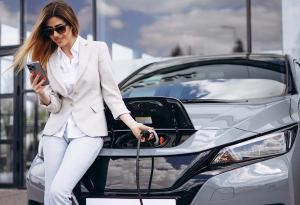
The image above captures a modern EV owner charging her vehicle while checking charging status on a smartphone. This simple interaction represents the next generation of intelligent energy ecosystems where vehicles, charging systems, and digital platforms work seamlessly together.

Convenient Charging for Everyday Life

One of the key advantages of electric vehicles is the convenience of charging. Unlike traditional refueling, EV charging can happen almost anywhere—at home, at work, in parking garages, or through mobile charging solutions designed to bring power directly to the vehicle.

Smart charging systems allow drivers to monitor charging progress, control energy usage, and manage charging schedules through mobile apps. This level of connectivity gives EV owners greater control over their energy consumption while making charging more efficient and accessible.

Smart Energy Management

Modern EV charging solutions are increasingly integrated with intelligent energy management systems. These platforms help optimize electricity usage by balancing power demand, reducing peak energy costs, and integrating renewable energy sources such as solar power.

By connecting vehicles, chargers, and energy storage systems, smart energy platforms enable a more flexible and efficient power network that benefits both users and the grid.

Supporting the Future of Clean Transportation

As more cities and businesses move toward sustainable transportation, reliable charging infrastructure becomes essential. Mobile charging systems, public charging stations, and integrated energy storage solutions are helping create a robust ecosystem that supports the rapid expansion of electric mobility.

These technologies ensure that drivers can access power wherever it is needed, reducing range anxiety and making EV ownership more practical for everyday use.

A Connected Energy Ecosystem

The future of transportation is not only electric—it is connected. Vehicles, charging stations, and energy management systems are becoming part of a unified digital network designed to improve efficiency, reliability, and sustainability.

With continued innovation in EV charging technology, the transition toward clean mobility will accelerate, bringing us closer to a smarter and more sustainable energy future.

As the world accelerates toward renewable energy, the ability to store power efficiently has become just as important as generating it. Battery Energy Storage Systems (BESS) play a critical role in balancing energy supply and demand, ensuring reliable power delivery even when renewable sources like solar and wind are intermittent.

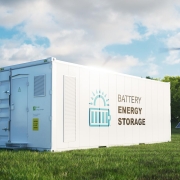
The image above illustrates a modern battery energy storage container deployed in a renewable energy field, surrounded by solar panels and wind turbines. This type of system captures excess electricity produced during peak generation hours and stores it for later use, allowing energy to remain available when production drops or demand increases.

Bridging the Gap Between Generation and Consumption

Renewable energy sources such as solar and wind are naturally variable. Solar panels generate power during daylight hours, while wind turbines rely on changing weather conditions. Battery storage systems bridge this gap by storing surplus energy and releasing it when needed.

This capability allows energy operators and businesses to stabilize the grid, reduce energy waste, and maintain a consistent power supply. By smoothing fluctuations in renewable generation, battery storage enables a more resilient and efficient energy infrastructure.

Supporting Clean Energy Integration

Large-scale battery storage containers like the one shown in the image are designed to integrate seamlessly with renewable energy installations. These systems can support:

  • Solar farms
  • Wind power plants
  • Microgrids
  • Industrial energy management
  • Grid stabilization

By storing clean energy produced by renewable sources, battery systems help reduce reliance on fossil fuels while improving the reliability of sustainable power networks.

Improving Grid Stability and Efficiency

Energy storage systems play a key role in modern grid management. They can quickly respond to fluctuations in electricity demand, delivering stored energy within seconds. This rapid response capability supports grid frequency regulation, peak shaving, and backup power services.

For utilities and energy providers, battery storage helps optimize energy distribution while reducing operational costs. For businesses and communities, it ensures uninterrupted power and improved energy independence.

Enabling a Sustainable Energy Ecosystem

Battery energy storage is a foundational technology for the future of renewable power. By combining solar generation, wind energy, and intelligent storage systems, energy providers can create a flexible and reliable infrastructure that supports long-term sustainability.

As renewable energy adoption continues to grow worldwide, advanced battery storage solutions will remain essential in unlocking the full potential of clean energy.